
Homeowner blog · Roof life · Colorado
How Long Does a Roof Last in Colorado? Rated Life, What Shortens It and What Adds Years
Every roofing material comes with a rated life, and the Front Range has its own opinion about it. Here are the published numbers, what Colorado sun, hail and freeze-thaw do to them, and the handful of habits that move a roof toward the long end of its range instead of the short one.
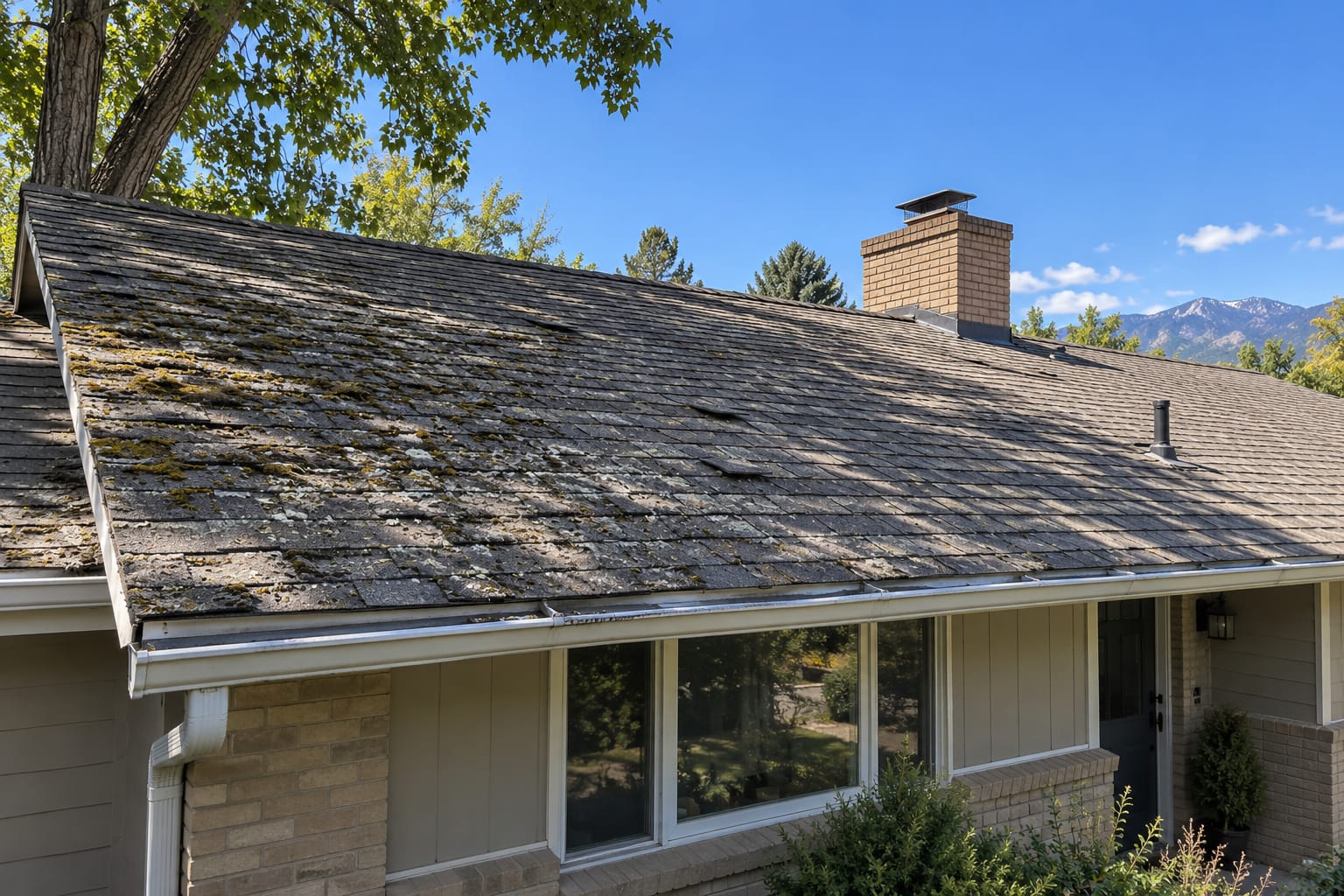
Fig. 01 Granule loss on the sun side, moss on the shade side
At a glance
- Published guideline life: about 20 years for three-tab asphalt, about 30 for architectural
- Metal, tile and slate are rated for decades longer
- Colorado sun, hail and freeze-thaw push asphalt toward the early end
- Ventilation, clear drainage and after-storm inspections add years
The rated life, by material
The most widely used reference is the life expectancy chart published by InterNACHI, the home inspectors’ association, which collects the expected service life of every component in a house under normal wear and regular maintenance. For roofing it lists these figures:
- Three-tab asphalt shingles: about 20 years
- Architectural (laminated) asphalt shingles: about 30 years
- Wood shingles and shakes: about 25 years
- Metal: 40 to 80 years
- Clay and concrete tile: 100 years or more
- Slate: 60 to 150 years
- Modified bitumen (low-slope): about 20 years; built-up roofing about 30
Guidelines, not promises
The chart says so itself: the figures are guidelines under normal wear and recommended maintenance, not to be relied on as a promise about any particular roof. Two roofs with the same shingle can be a decade apart in real life. The material sets the ceiling; the climate, the installation and the attic underneath decide how close a roof gets to it.
Most homes in Fort Collins, Loveland, Windsor and Greeley are under architectural asphalt, so the practical question for most homeowners is where in that roughly 20-to-30-year window a Colorado roof actually lands. In our experience it is closer to the start than the end, for reasons the next section explains.
What the Front Range does to a roof
Sun. At a mile of elevation the ultraviolet load is high and the sky is clear most of the year. UV is what dries the asphalt in a shingle; a dry shingle loses its granules, then its flexibility, then its seal. South and west slopes get the most of it.
Hail. Northern Colorado sits in a corridor that sees damaging hail most summers. A hailstone does not usually punch through a shingle; it bruises it, crushing the granules into the mat. Each bruise is a spot that will weather years ahead of the shingles around it. A roof that has been through several hail seasons without replacement is older than its birth date says.
Freeze-thaw. Front Range winters swing above and below freezing repeatedly, sometimes within a day. Water that gets under a lifted tab or into a cracked sealant freezes, expands, and widens the gap it came in through. Ice dams at the eaves, driven by a warm attic and a cold overhang, push meltwater back up under the shingles.
Wind. Downslope winds off the foothills lift tabs on the windward edges and test every seal strip. Once a tab has lifted and resealed a few times it stops resealing.
Snow load and temperature swings. Wet spring snow is heavy, and the daily expansion and contraction of the roof deck works at every nail and every flashing joint.
None of these is unusual on its own. What makes Colorado hard on asphalt is getting all of them, every year, on the same roof.
Why one slope ages faster than the other
Walk around almost any house in Northern Colorado that is fifteen years into its roof and you will see two different roofs. The south and west slopes are sun-faded, granule-thin and brittle. The north slope still has its color, but it holds moisture longer, and where it is heavily shaded it can grow algae or moss that keeps the shingle damp. The east slope, which gets morning sun and the afternoon hail’s lee side, is often the best of the four.
This is why the question “how old is my roof” has four answers, and why a roof inspection should photograph each slope separately. It is also why a repair-versus-replacement call is rarely obvious from the driveway; our article on deciding between repair and replacement goes through that call slope by slope.
What adds years
You cannot change the climate. You can change almost everything else that shortens a roof.
- Attic ventilation and insulation. A hot attic cooks shingles from below in summer and builds ice dams in winter. Balanced intake at the eaves and exhaust at the ridge is the single biggest factor you control.
- Clear drainage. Gutters and valleys that hold leaves and needles hold water against the roof edge. Clean them each fall and after the cottonwoods drop.
- Trees cut back. Limbs that touch the roof abrade it in the wind and keep it shaded and damp.
- Penetrations maintained. Pipe boots crack years before shingles do. Replacing a boot is a small job; the leak it prevents is not.
- An inspection after hail season. Bruised shingles do not announce themselves. A walk of the roof after a storm finds the damage while it is still a claim and a repair, not a replacement.
- Moss removed gently. Never pressure-wash a shingle roof; it strips the granules that were protecting it. A soft treatment and improved drainage do the job.
Low-slope sections, such as a porch roof or an addition, are a separate case. A reflective roof coating can protect a sound low-slope membrane from UV and heat; it does not rescue a failing one, and it is not a treatment for shingles. Our article on whether roof coatings actually work draws that line.
Signs the clock is running out
From the ground, with binoculars if you have them, look for bald patches where the dark mat shows through, tabs that have curled up at the edges or cupped in the middle, a sandy wash of granules at the downspout outlets, and ridges or hips that have gone ragged. In the attic, look for pinholes of daylight, staining around nails, and insulation that is damp in spring. Any one of these on an asphalt roof past fifteen years is a reason to get the slope-by-slope photos and a written scope now, while you still have the choice between a repair and a planned roof replacement on your own schedule, rather than a forced one after the next storm.
Sources
- InterNACHI, Standard Estimated Life Expectancy Chart for Homes (roofing and exterior components): nachi.org/life-expectancy.htm
- Rocky Mountain Insurance Information Association, Colorado hail season (mid-April to mid-September): rmiia.org
Keep reading
Related reading and services.
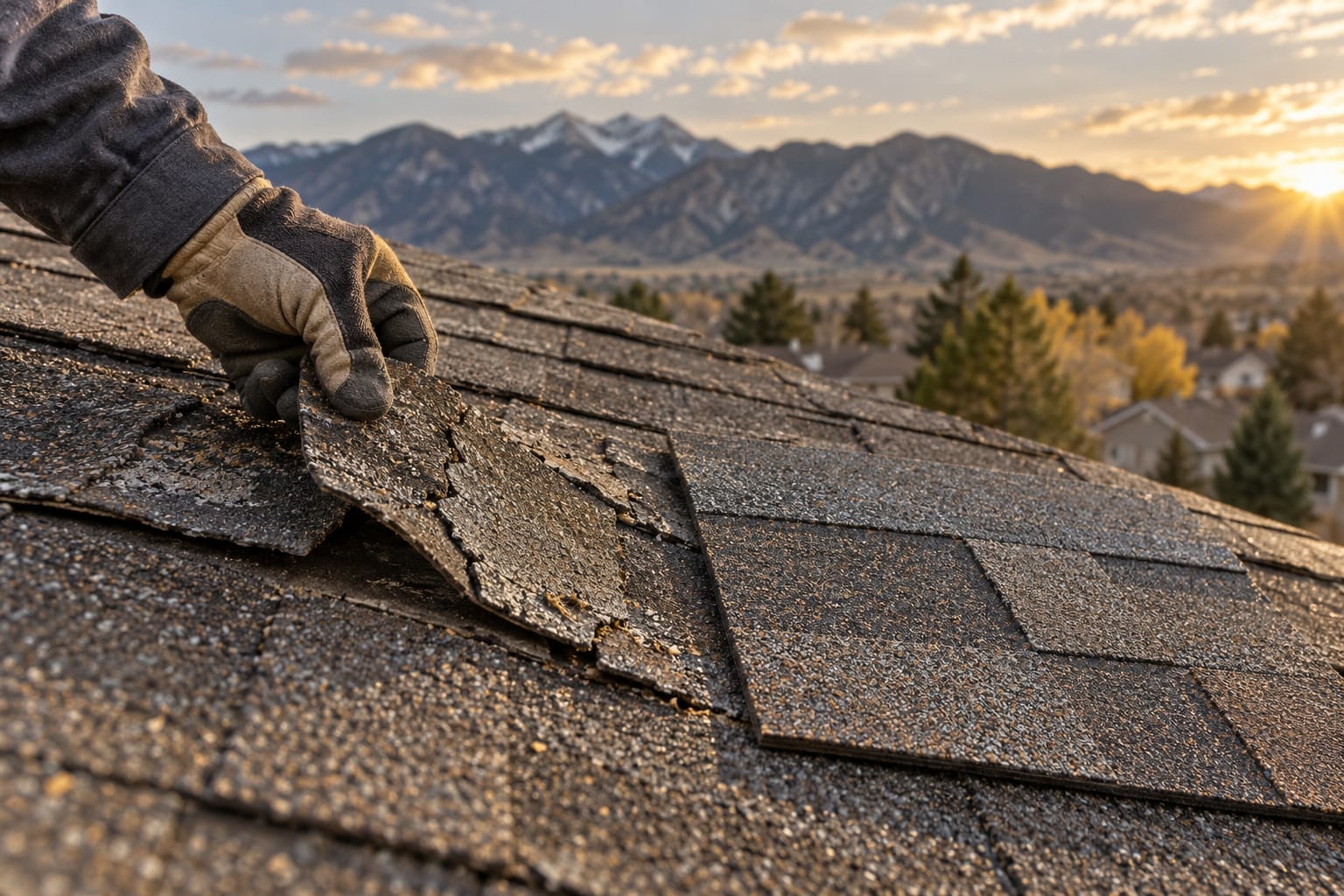
Roof repair or replacement: how to decide
When a repair is enough, when replacement is the honest answer, and what the report should show first.
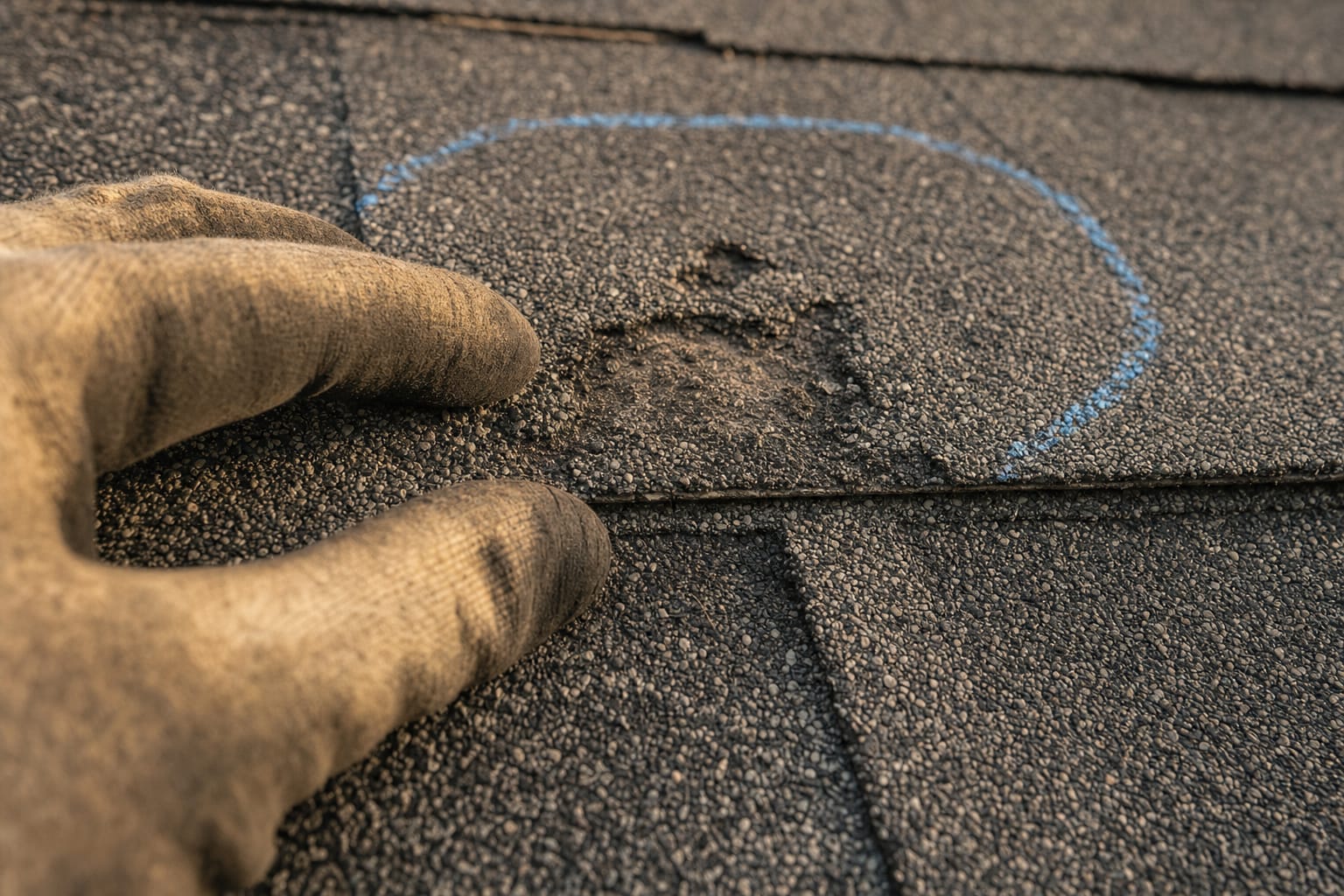
When is hail season in Colorado?
When the season runs on the Front Range, what a hailstone does to a shingle, and what to do before and after a storm.
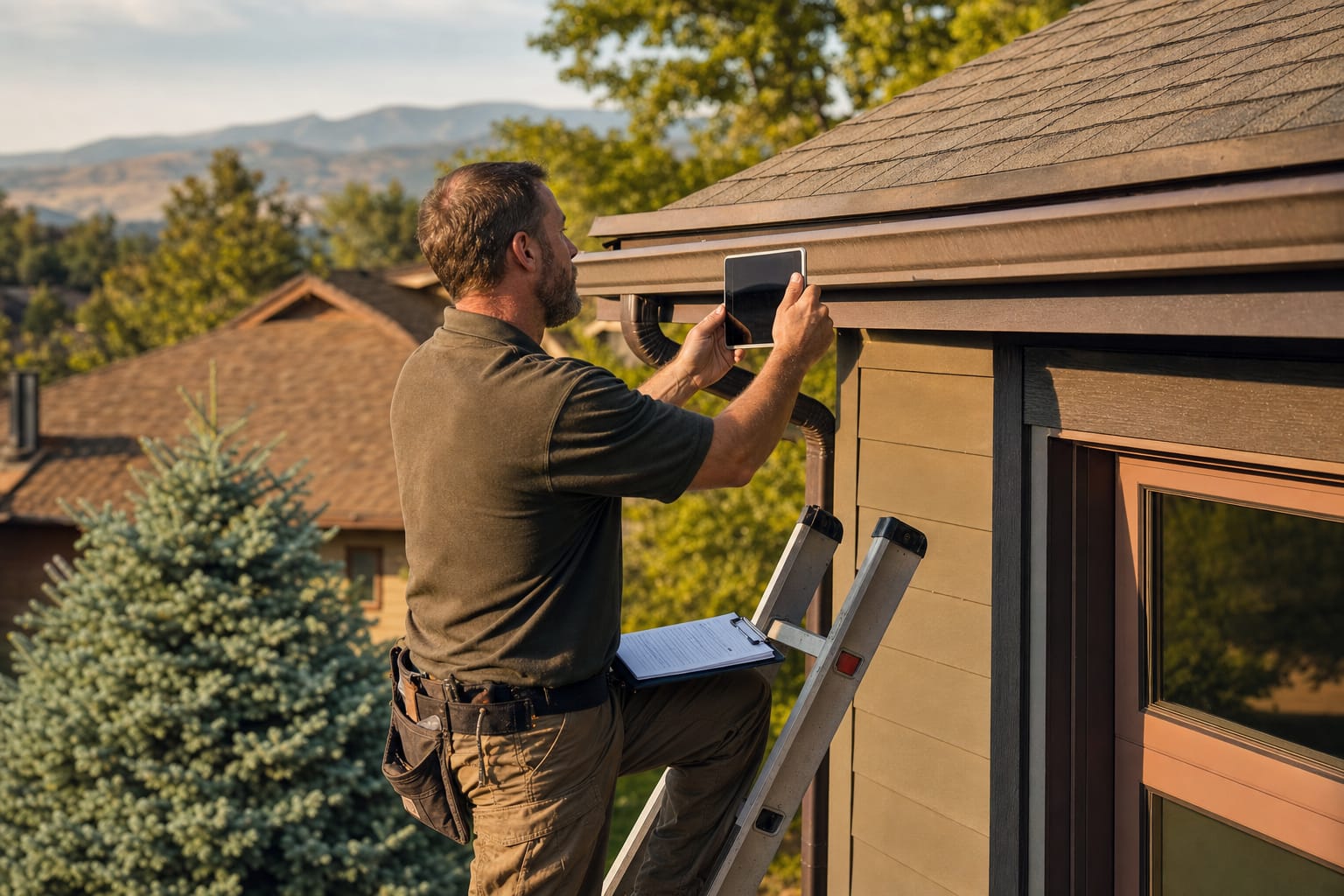
Free roof inspection in Fort Collins
Every slope walked and photographed, every flashing checked, a written scope you keep. No deadline, no pressure.
Roof life questions
What homeowners ask about how long a roof lasts.
How long do architectural shingles last in Colorado?
InterNACHI’s life expectancy chart puts architectural asphalt shingles at about 30 years under normal wear and maintenance. Colorado’s UV, hail and freeze-thaw cycles tend to move a real roof toward the early part of that range, and a roof that has been through several hail seasons may be ready sooner.
Do metal roofs last longer than shingles?
On paper, yes: the same chart lists metal roofing at 40 to 80 years against about 20 to 30 for asphalt. Metal can still be dented by hail and depends on its fasteners and seams, so it is not maintenance-free, but its rated life is far longer.
How often should a roof be inspected in Colorado?
Once a year is a sensible baseline, and always after a hail or high-wind storm, because hail bruises are invisible from the ground and are easiest to deal with while they are still a repair. An inspection that ends with photos and a written scope costs you nothing with us.
Can a roof last 50 years?
Metal, tile and slate are rated for that and more by the InterNACHI chart. Asphalt shingles are not; a 50-year-old asphalt roof in Colorado would be well past the end of its range. If your home’s roof is asphalt and the age is uncertain, the permit history at your city’s building department often records the last replacement.
Does a roof coating extend the life of a shingle roof?
No. Reflective coatings are a treatment for sound low-slope roofs, where they shield the membrane from UV and heat. They are not made for sloped shingle roofs, and they do not restore shingles that have already lost their granules or their flexibility.
Free inspection
Find out how many years your roof has left.
A free inspection with photos, a slope-by-slope read on wear, and a written scope if anything needs attention. No obligation.